
When a car will not start, the battery gets the blame. Often that is fair. But a battery is only half of a system. While you drive, the vehicle’s charging system, built around the alternator, is supposed to put back the energy used to start the engine and to run everything electrical. If the charging system is not doing its job, even a brand-new battery will eventually go flat.
Telling the two apart saves money and frustration. Replacing a good battery because of a charging problem means you will be stranded again soon. Here is how to think about it.
One note before we start: we work on batteries and battery cables. We do not repair alternators or other charging components. What we can do is test both the battery and the charging output on site and tell you clearly which one is the problem, so you know where to go next.
How the charging system works
When the engine is running, the alternator, driven by a belt from the engine, generates electricity. A voltage regulator, usually built into the alternator or controlled by the engine computer, keeps the output at the right level. That current runs the vehicle’s electrical loads and recharges the battery.
On many newer vehicles, the engine computer varies charging voltage deliberately to save fuel or to protect the battery, using information from a battery sensor. That is one reason some vehicles need battery registration after a replacement.
Clues that point to the battery
- The car is slow to crank or will not crank after sitting, but once running, everything works normally.
- The battery is older or has been through several Florida summers.
- A jump gets you going, and the car runs fine all day, with no warning lights, then struggles again the next morning.
- The battery case is swollen, cracked, or leaking, or the terminals are heavily corroded.
- Battery voltage reads normal while running, but the battery tests weak in a load or conductance test.
A battery that has lost capacity can recharge partway, so it may start the car after a long drive but fail after it sits. Our guide to signs your car battery is failing covers the common patterns.
Clues that point to the charging system
- A battery or charging warning light comes on while driving.
- The car dies while driving, or electrical items fade one by one: radio, power windows, dash lights, then the engine.
- Headlights dim and brighten with engine speed, or flicker at idle.
- A whining or grinding noise from the front of the engine.
- A burning rubber or hot electrical smell, which could mean a slipping belt or an overheating component.
- A new battery goes flat within days or weeks.
If the car dies while driving, the charging system is a prime suspect, because the engine itself relies on electrical power to run. Our post on a car that dies while driving explains what to do if it happens.
Clues that point to overcharging
Charging systems can also fail the other way, pushing too much voltage into the battery. Signs include:
- A strong rotten-egg smell from the battery.
- A battery that is hot to the touch after driving.
- Swelling of the battery case.
- Heavy corrosion that comes back quickly after cleaning.
- Bulbs burning out frequently.
Overcharging damages batteries quickly. See signs a battery is being overcharged.
Simple checks with a multimeter
If you have a basic digital multimeter, you can gather useful information.
With the engine off
After the car has rested for a few hours, measure across the battery posts. A healthy, fully charged 12-volt lead-acid battery reads about 12.6 volts or a bit higher.
With the engine running
Start the engine and measure again. On many vehicles, you should see a higher reading, often somewhere in the mid-13 to mid-14 volt range, showing the system is charging. If the reading stays close to the engine-off reading, or drops, the system may not be charging. If it is well above the normal range, the system may be overcharging. Keep in mind that some newer vehicles intentionally vary charging voltage, so a single reading is not always conclusive.
With loads on
With the engine running, turn on the headlights, blower fan and rear defroster. The voltage may dip slightly but should stay above resting battery voltage.
Why a professional test helps
A multimeter shows voltage, but it cannot tell you whether the battery has lost capacity, or whether the charging system can keep up under real load. A proper battery and charging test measures battery health and cranking ability, then checks charging voltage at idle and under load. It also looks at the connections, since a corroded cable or bad ground can make a good charging system look weak.
Cables and grounds: the overlooked link
Charging current reaches the battery through cables and grounds. If the main cable or ground strap is corroded, the battery may not receive the charge the alternator is producing. That can look like a charging failure. Replacing corroded battery cables is part of what we do, and it sometimes fixes what looked like a charging problem.
What to do once you know
- If the battery is the problem, replace it with the correct group, type and rating. Our car battery replacement service handles this on site.
- If the charging system is the problem, take the vehicle to a qualified repair shop for diagnosis and repair of the alternator, regulator or belt. Replacing the battery first will not fix it.
- If both are weak, fix the charging problem first, then replace the battery, because a failing charging system may have damaged it.
Frequently asked questions
Can a bad battery damage the alternator?
A battery with an internal short or very low charge can force the alternator to work harder than it should. It is one more reason to test the battery when a charging part fails.
Will a jump start tell me which is bad?
Not reliably. Many vehicles will run after a jump whether the battery or the charging system is at fault.
How long can I drive with a charging light on?
Not long, and not safely. The vehicle is running on battery power alone. Get to a safe place and have it checked.
Testing in Wesley Chapel
If you are not sure whether your battery or charging system is to blame, we come to you in Wesley Chapel and across Pasco County. We include a free battery test on every visit, check the charging output, and give you a straight answer on what you need.
Related services
Related posts
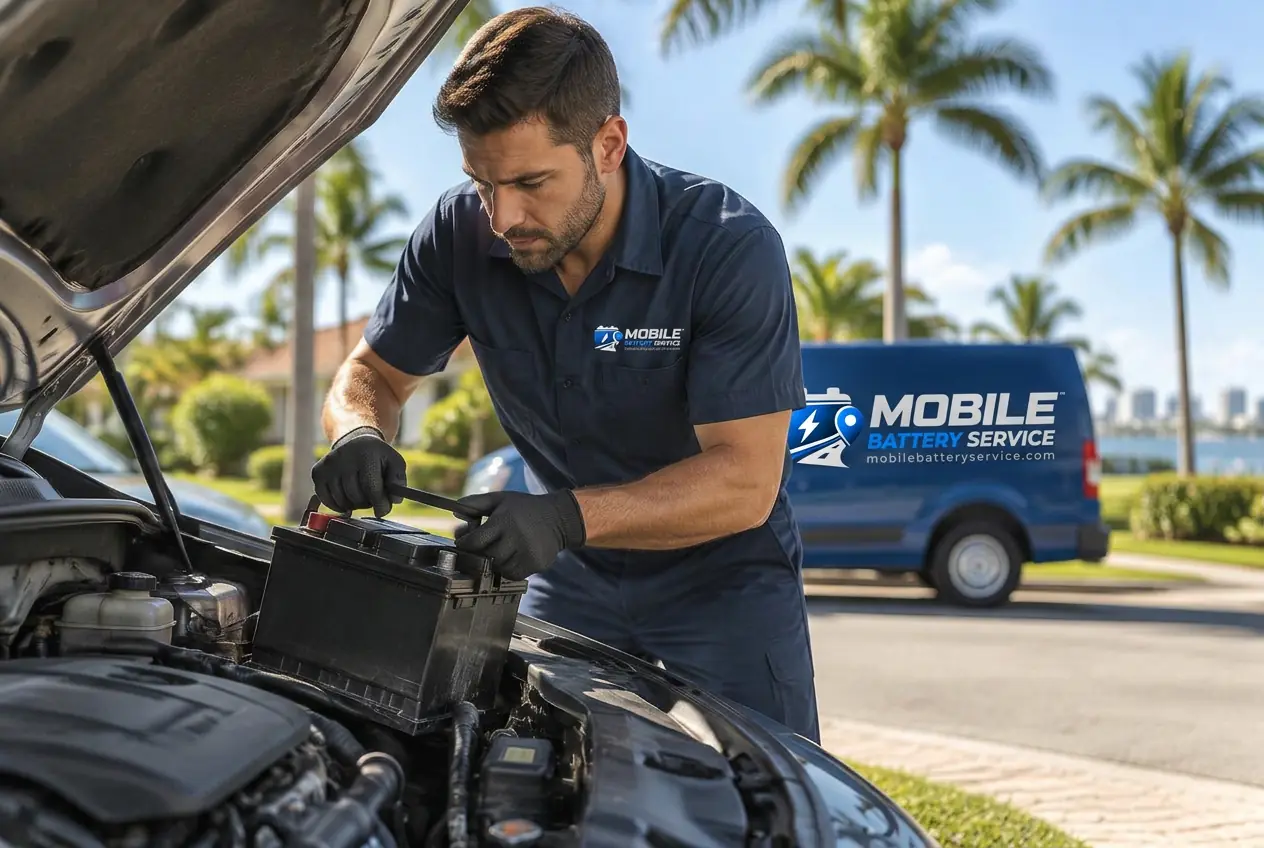
Testing & Troubleshooting · Aug 10, 2026 · 2 min read
Signs Your Car Battery Is Failing
Slow cranking, clicking, a battery that needs jumps? Learn the signs your car battery is failing in Florida heat. We come to you: (855) 660-4300.
Testing & Troubleshooting · Oct 28, 2026 · 5 min read
12-Volt Battery Voltage Chart: What Your Readings Really Mean
12.6 volts, 12.2 volts, 11.8 volts: what do they mean? Here is a plain chart for 12-volt lead-acid batteries, plus the important things a voltage reading cannot tell…
Testing & Troubleshooting · Oct 28, 2026 · 5 min read
Battery Tests Good but the Car Won’t Start: What Else to Check
The battery passed its test, yet the car still will not start. That is frustrating, but it rules out one thing. Here is what to look at next.
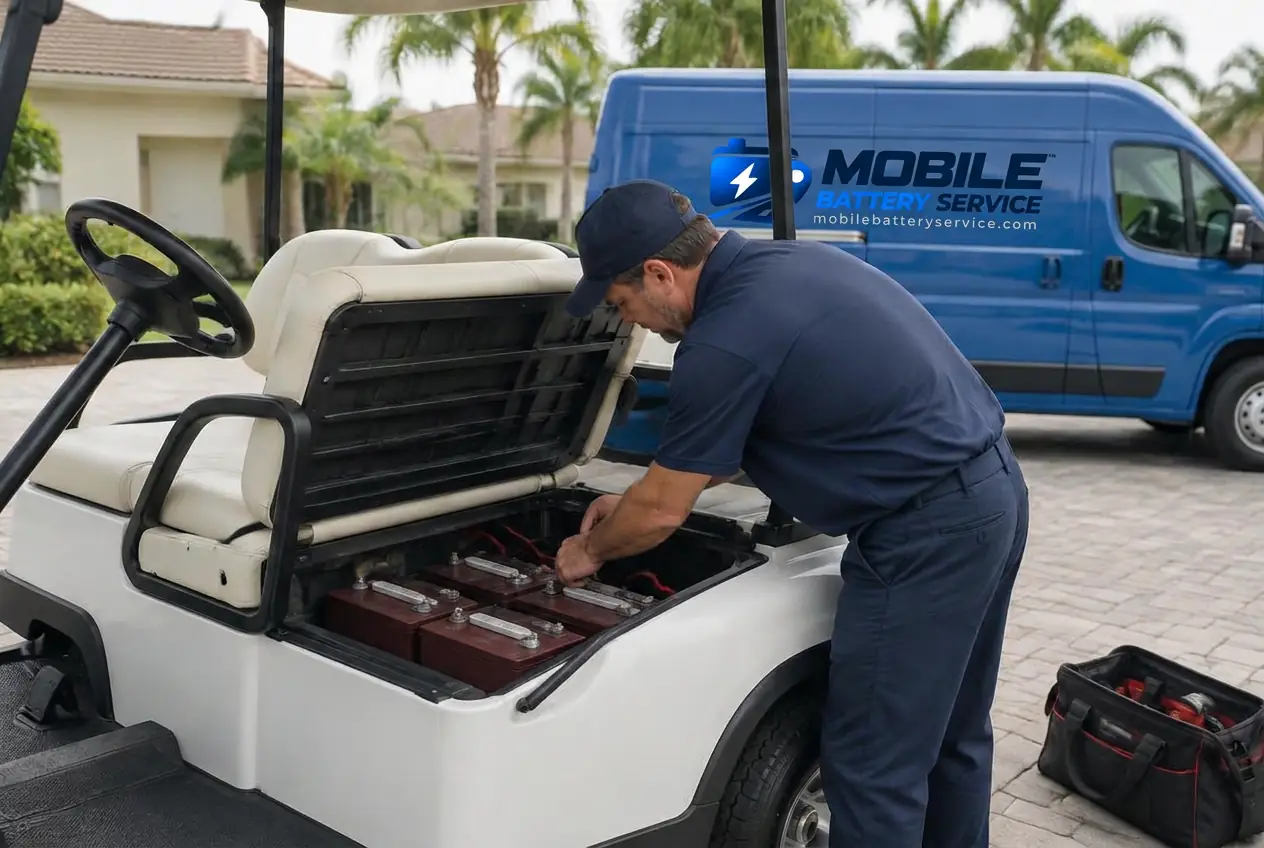
Golf Cart Batteries · Oct 28, 2026 · 5 min read
Why Your Golf Cart Is Losing Range and How to Find the Cause
When a cart that used to run all day starts dying halfway through, the cause is usually one of a handful of things. Here is how to work…
Popular battery guides
- How Long Do Car Batteries Last in Florida?
- Golf Cart Batteries: Lithium vs. Lead-Acid
- Signs Your Car Battery Is Failing
- Forklift Battery Maintenance Checklist
- What to Do When Your Car Won’t Start
- AGM vs. Standard Car Batteries: Which Do You Need?
Where we work
We come to you across Hernando County, Pasco County, Pinellas County, and Hillsborough County. See all mobile battery services or read more about Mobile Battery Service.