
For a business that runs five, fifteen or fifty vehicles, a dead battery is never just a dead battery. It is a driver standing in the yard at 6:30 in the morning, a customer appointment that slips, and a supervisor juggling routes. Most of those mornings can be avoided with a simple, consistent battery maintenance schedule.
This guide is written for small and mid-sized fleets: service vans, pickups, box trucks and work trucks. It does not need special software, just a calendar and a little discipline.
Why fleets lose batteries faster than private cars
Fleet vehicles live a harder life than the family sedan:
- Heavy accessory loads. Inverters, lights, laptops, radios and liftgates all draw from the battery.
- Stop-and-go driving. Many short stops with the engine off and on again means lots of starts and little time to recharge.
- Idling. Idling at a job site runs the engine but often does not fully charge a battery that is also feeding accessories.
- Heat. Florida heat speeds up internal corrosion, and engine bays on work trucks get extremely hot.
- Different drivers. Nobody “owns” the vehicle, so small warning signs like a slow crank often go unreported.
The core idea: test on a schedule, not on failure
The most useful change a fleet can make is moving from replacing batteries when they fail to testing them on a set schedule and replacing them when test results say they are weakening. A battery rarely dies without warning. Its cranking ability and capacity decline over months. A professional battery test can see that decline long before a driver notices.
A sample schedule
Adjust this to your vehicles and duty cycles, but here is a practical starting point.
Every week: driver walkaround
Ask drivers to include a few battery items in their pre-trip check:
- Does the vehicle crank normally, or slower than usual?
- Any battery or charging warning lights on the dash?
- Any visible corrosion, cracked cases or loose cables when the hood is opened?
Drivers should report any change. A slow crank is the single best early warning you will get.
Every quarter: battery and charging test
Every three months, test each vehicle’s battery and the charging voltage. Record:
- Battery voltage at rest.
- Measured cold cranking amps versus the battery’s rating.
- State of health result from the tester.
- Charging voltage with the engine running.
Quarterly testing is often enough to catch a battery on its way down. During summer, some fleets test monthly.
Every six months: connection service
Clean and protect terminals, check that hold-downs are tight, and inspect cables for swelling or cracking. Vibration on work trucks loosens connections over time. Our post on vibration and work truck battery failure explains why.
Once a year: plan replacements
Look at your records and identify any battery that tested weak or is approaching the age where batteries in your fleet typically fail. Budget for those replacements ahead of the summer, when failures spike.
Keep simple records
A spreadsheet is enough. Track for each vehicle:
- Unit number and VIN.
- Battery group, type and install date.
- Each test result with date.
- Replacement history.
Over time this data tells you how long batteries really last in your fleet. We expand on this in why fleet battery test records pay off.
Replace in pairs where it matters
Diesel pickups and some trucks use two batteries. They should be tested individually and usually replaced together, as explained in dual battery diesel trucks.
What to do when a battery tests weak
A battery that tests weak today might still start the vehicle tomorrow. The question is whether you want to find out on a Tuesday morning with a crew waiting. For fleets, proactive replacement of weak batteries almost always costs less than the disruption of a roadside failure.
That said, do not replace on test results alone without checking the charging system. A battery that keeps testing weak on the same vehicle may be undercharged, or the vehicle may have a drain. Our guide to telling a bad battery from a charging problem helps sort that out.
Bringing the service to the yard
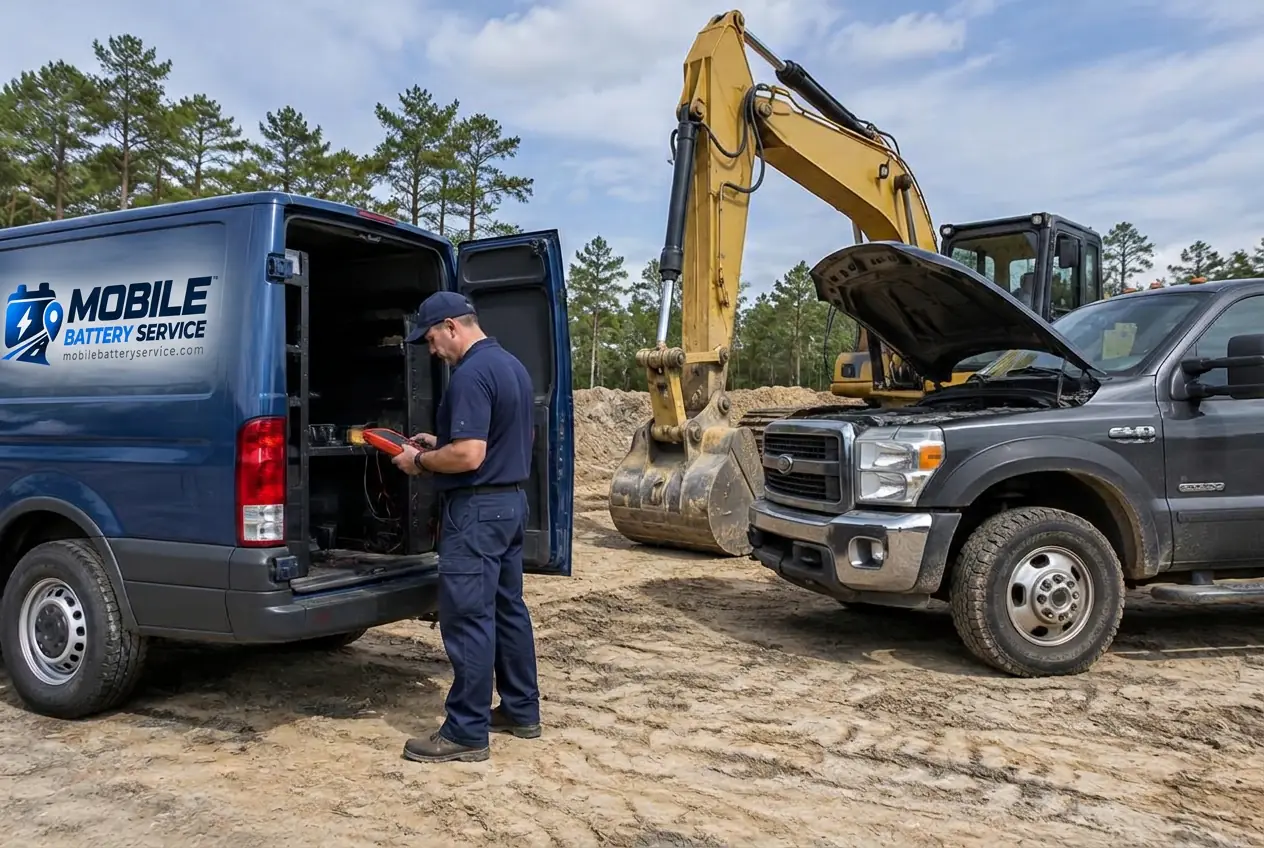
Pulling vehicles out of service to take them to a parts store or shop is part of what makes battery maintenance feel expensive. A mobile service flips that around. We come to your yard or job site, test the whole fleet in one visit, replace weak batteries on site, and leave you with results for each unit.
Seasonal adjustments for Florida fleets
A schedule that works in Ohio needs a few tweaks here. Our hardest months for batteries are the hot ones, not the cold ones. Heat does its damage quietly through the summer, and the failures often show up later, on the first cool morning of the year when a battery that was already weakened finally cannot crank.
With that in mind, many fleets find these adjustments helpful:
- Test before summer. A round of testing in April or May catches batteries that will not survive the heat.
- Increase frequency from June through September. Monthly checks during the hottest months are reasonable for vehicles that idle or carry heavy loads.
- Test again in the fall. Batteries that made it through the summer may be just barely hanging on.
- Prepare for storms. Before a hurricane threatens, make sure every vehicle has a healthy battery and that you know which ones are weak. Vehicles may sit for days, then be needed urgently. See hurricane season battery prep.
Training drivers to speak up
The best maintenance schedule still depends on drivers reporting what they notice. Make it easy. A text to a supervisor or a note on the daily inspection form is enough. Explain to drivers that a slow crank today is a no-start next week, and that reporting it is part of the job, not a complaint. Fleets that build this habit see far fewer surprise failures.
Frequently asked questions
How many vehicles do I need for a fleet schedule?
Even two or three vehicles benefit. The schedule above works the same whether you run three vans or thirty.
Should we keep spare batteries in stock?
Batteries self-discharge while sitting, especially in heat. If you keep spares, store them cool and keep them charged. Rotate them so the oldest spare is installed first, and check its voltage before it goes in.
Do battery maintainers help fleets?
Yes, for vehicles that sit for days between jobs. A maintainer keeps the battery topped up without overcharging.
Fleet battery service across Hillsborough County
If you run vehicles out of a yard anywhere in Hillsborough County, from Tampa to Plant City, our truck and fleet battery service can set up a testing rhythm that fits your operation. If your yard also has forklifts, we can look after the forklift batteries on the same visit.
Related services
Related posts
Truck & Fleet Batteries · Oct 28, 2026 · 5 min read
Dual Battery Diesel Trucks: Why Both Batteries Get Replaced Together
Most heavy-duty diesel pickups carry two batteries. Here is how they work together, why mismatched batteries cause trouble, and what to expect at replacement time.
Car Batteries · Jun 18, 2026 · 1 min read
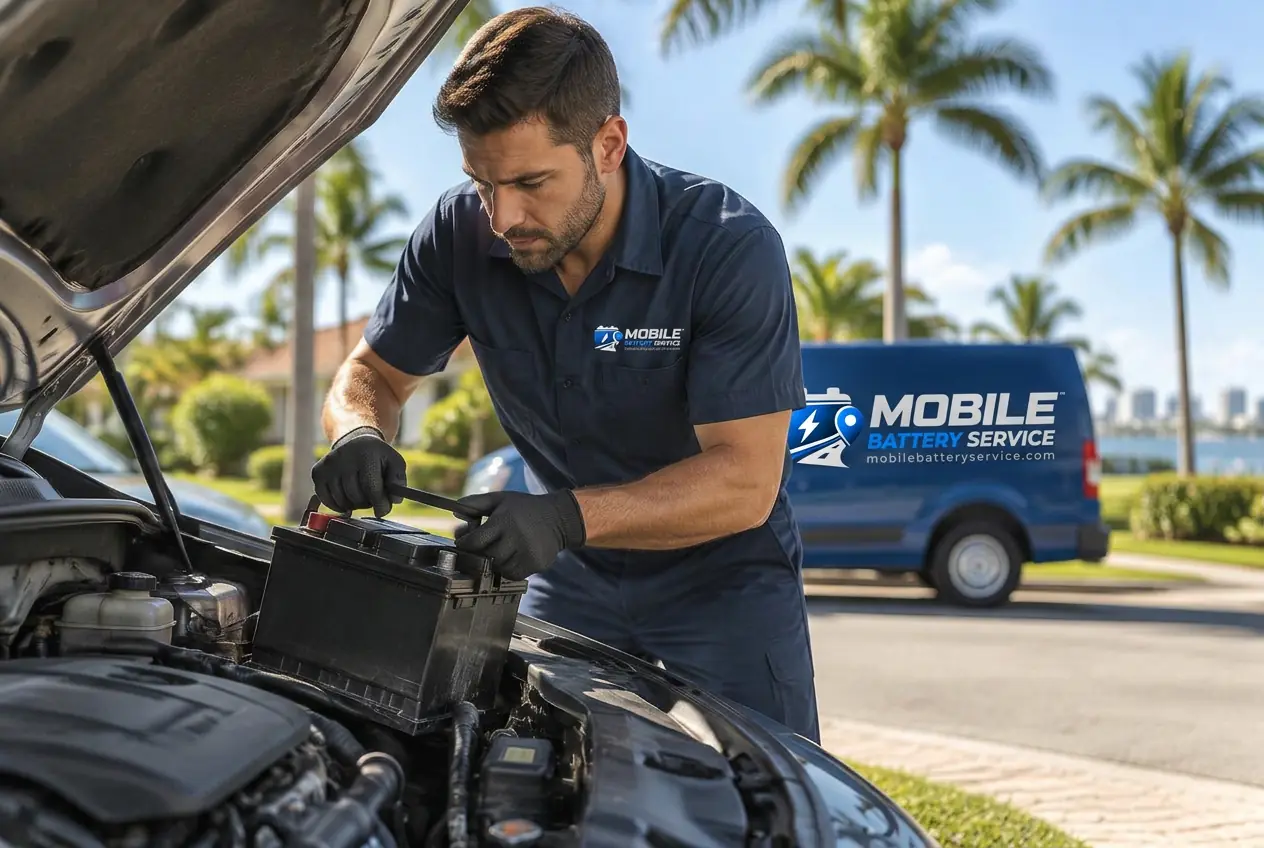
AGM vs. Standard Car Batteries: Which Do You Need?
Start-stop systems, heat and electronics are changing which battery your vehicle needs.
Golf Cart Batteries · Oct 28, 2026 · 5 min read
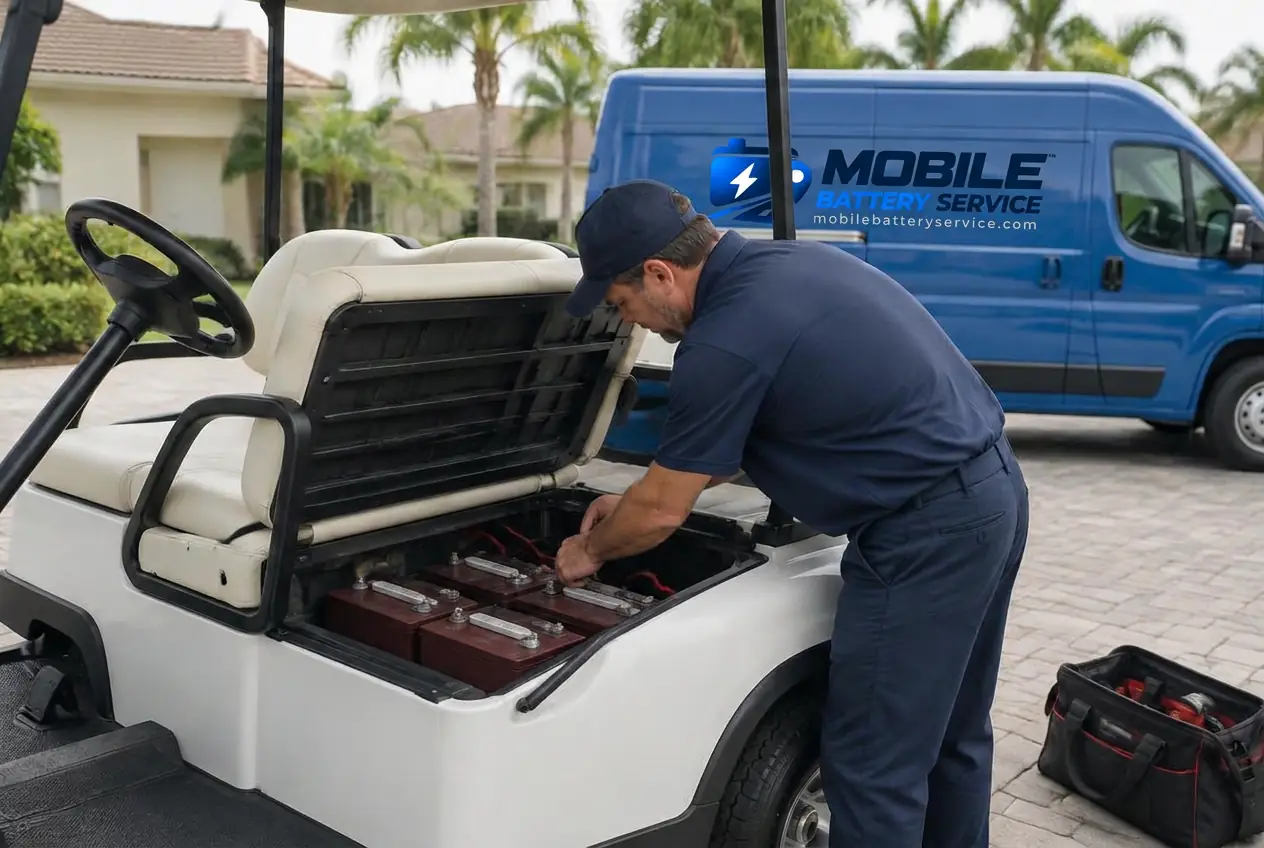
Why Your Golf Cart Is Losing Range and How to Find the Cause
When a cart that used to run all day starts dying halfway through, the cause is usually one of a handful of things. Here is how to work…
Car Batteries · Oct 28, 2026 · 5 min read
Parasitic Drain: Why Your Car Battery Dies Overnight
If your car starts fine one day and is dead the next morning, something may be drawing power while it is parked. Here is how parasitic drain works…
Popular battery guides
- How Long Do Car Batteries Last in Florida?
- Golf Cart Batteries: Lithium vs. Lead-Acid
- Signs Your Car Battery Is Failing
- Forklift Battery Maintenance Checklist
- What to Do When Your Car Won’t Start
- AGM vs. Standard Car Batteries: Which Do You Need?
Where we work
We come to you across Hernando County, Pasco County, Pinellas County, and Hillsborough County. See all mobile battery services or read more about Mobile Battery Service.