
Open the hood of most heavy-duty diesel pickups and you will find not one battery but two, usually one on each side of the engine bay. Owners are often surprised when a technician recommends replacing both when only one seems to be weak. There is a good reason for that advice, and it comes down to how the two batteries share the work.
Why diesels use two batteries
A diesel engine compresses air far more than a gasoline engine does, and it relies on that compression heat to ignite the fuel. Turning a high-compression engine over takes a lot of current, and many diesels also use glow plugs or intake heaters that draw heavily before and during a cold start.
Rather than fit one enormous battery, manufacturers commonly use two 12-volt batteries wired in parallel. In a parallel setup:
- The positive terminals are connected together and the negative terminals are connected together.
- The system voltage stays at 12 volts.
- The available current and capacity are roughly the combined total of both batteries.
Heavy equipment and some commercial trucks use a series setup instead to get 24 volts. Our explainer on series vs. parallel battery wiring covers the difference, but for most pickups, parallel is what you are dealing with.
The weak-link problem
Two batteries in parallel behave like one large battery. That is great when both are healthy. When one starts to fail, it becomes a drain on its partner.
Here is what happens. A weak battery has lower capacity and often higher internal resistance. When the truck is parked, the stronger battery tends to discharge into the weaker one as the two try to balance. When you crank, the healthy battery ends up doing more than its share. When the alternator charges them, the weaker one may never fully recover.
The result is that a single bad battery can make the healthy one work harder and age faster. Replace only the weak one, and you now have a new battery paired with an older one of a different age and condition. The new battery gets dragged into the same cycle.
Why matched batteries matter
For a dual battery system to work well, both batteries should match as closely as possible:
- Same group size and type. Both flooded, or both AGM. Mixing technologies means they charge differently.
- Same rating. Matching cold cranking amps and reserve capacity keeps them sharing load evenly.
- Same age. Batteries age as they cycle and sit in heat. Two batteries from the same batch age together.
Many diesel pickups use Group 65, Group 78 or similar sizes, but it varies by truck. Matching the correct group is covered in car and truck battery group sizes.
When it is reasonable to replace just one
There are exceptions. If one battery failed early because of physical damage, a cracked case, or a defect, and the other is very new and tests strong, replacing one can make sense. The honest answer comes from testing both batteries individually.
That means disconnecting them from each other and testing each on its own. Testing them while connected only tells you about the pair. On every visit, we include a free battery test, and on dual-battery trucks that means looking at each battery separately before recommending anything.
Signs your dual battery system is struggling
- Slow cranking on the first start of the day, even though the truck runs fine afterward.
- Glow plug or wait-to-start light stays on longer than it used to before the truck will fire.
- One battery is noticeably warmer than the other after driving.
- Corrosion building up on one battery’s terminals far faster than the other.
- You have needed a jump more than once in a few weeks.
If the truck will not crank at all, our guide on jump starting a diesel truck explains why diesels need extra care, and our jump start service can get you going on site.
Cables and grounds on dual systems
Dual battery trucks have more connections, and every one of them is a place for corrosion or looseness to hide. The cable that links the two batteries together is easy to overlook. If it is corroded or loose, the batteries will not share load properly, and one may end up doing most of the work.
Check for:
- Green or white corrosion at either battery.
- Cracked or swollen cable insulation.
- Ground straps from engine to frame that are frayed or rusted.
We cover warning signs in truck battery cable replacement signs.
Florida heat and diesel batteries
Heat is the main enemy of lead-acid batteries, and engine bays on big diesels get extremely hot after a day of towing or idling at a job site. Heat speeds up corrosion of the internal plates and evaporation of electrolyte. That is one reason truck owners here often see shorter battery life than they would up north. Parking in shade when possible and getting the batteries tested each spring helps you plan replacement before a no-start.
What a dual battery replacement looks like
When we handle a truck battery replacement on a dual battery pickup, the process generally goes like this:
- Test each battery individually and check the charging voltage with the engine running.
- Confirm the correct group size, type and rating for both positions.
- Disconnect and remove both batteries, noting cable routing.
- Clean the trays, hold-downs and cable ends, and check the interconnect cable.
- Install the matched pair, tighten and protect the terminals.
- Start the truck and verify both batteries are charging.
- Take the old batteries for recycling.
Frequently asked questions
Can I put a bigger battery in one side?
Not recommended. Mismatched batteries in parallel do not share load evenly, which is the exact problem you are trying to avoid.
Is AGM worth it on a diesel?
AGM batteries handle vibration well and recover from deep discharge better than many flooded batteries, but both batteries must be AGM. See AGM upgrades for pickups.
How often should I test them?
At least once a year, and before summer. Trucks that tow, idle or carry accessory loads benefit from more frequent checks.
Serving truck owners across East Hillsborough
Whether your diesel works on a farm, a job site or a ranch near Plant City, we come to you, test each battery properly, and replace them as a matched pair when that is what the truck needs. If you run several trucks, our truck and fleet battery service can keep them on a regular schedule, and if the same yard holds tractors or skid steers, we handle heavy equipment batteries too.
Related services
Related posts
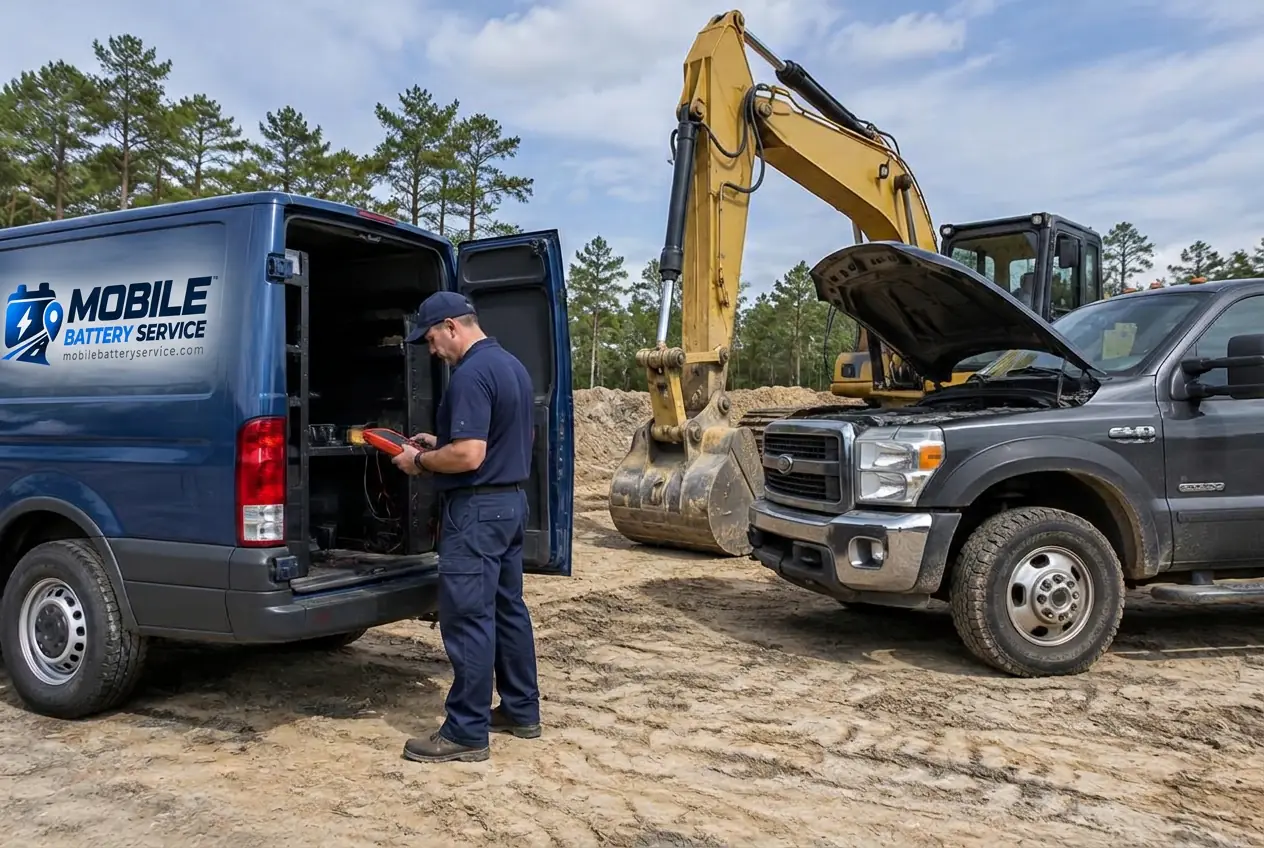
Truck & Fleet Batteries · Oct 28, 2026 · 5 min read
A Practical Battery Maintenance Schedule for Small Fleets
For a business with a handful of trucks or vans, a dead battery means a missed job. Here is a simple maintenance rhythm that catches weak batteries before…
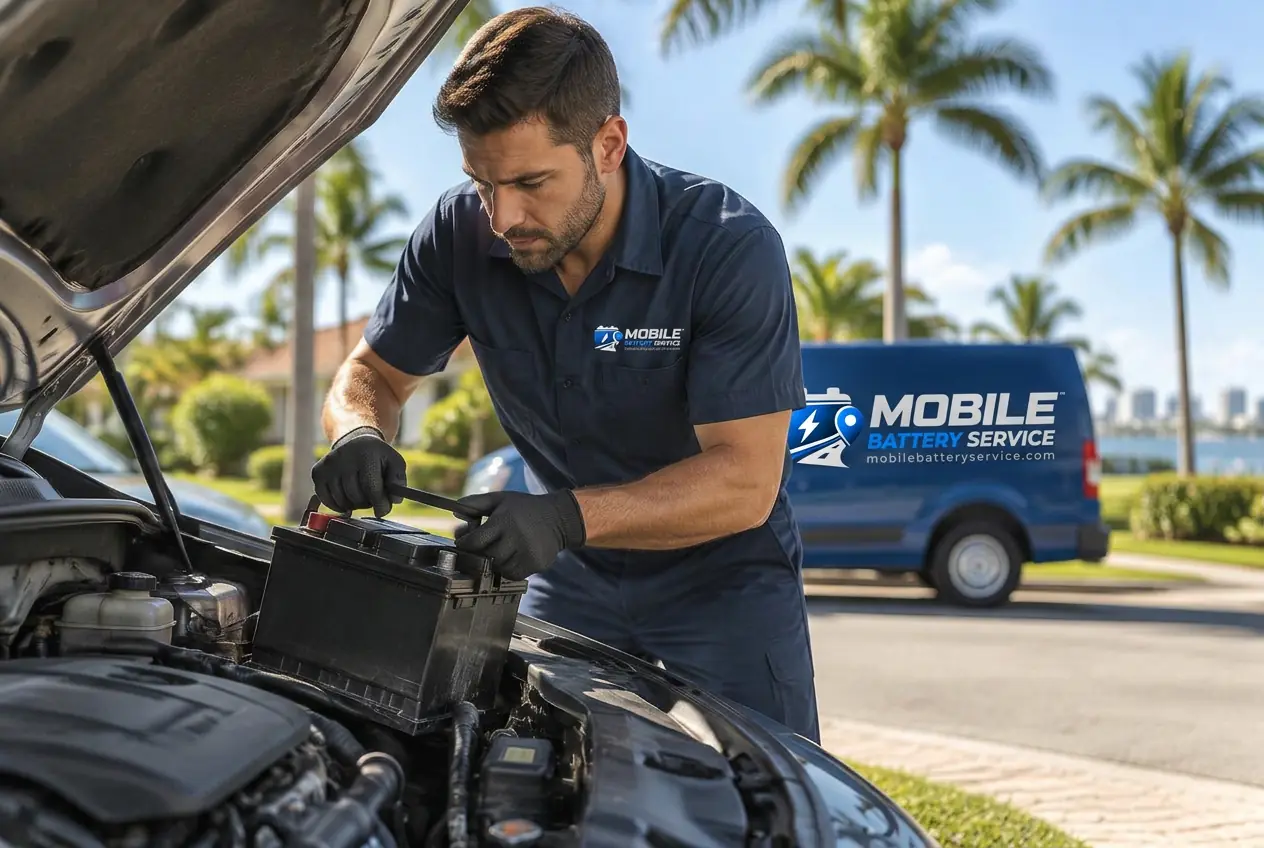
Car Batteries · Jun 18, 2026 · 1 min read
AGM vs. Standard Car Batteries: Which Do You Need?
Start-stop systems, heat and electronics are changing which battery your vehicle needs.
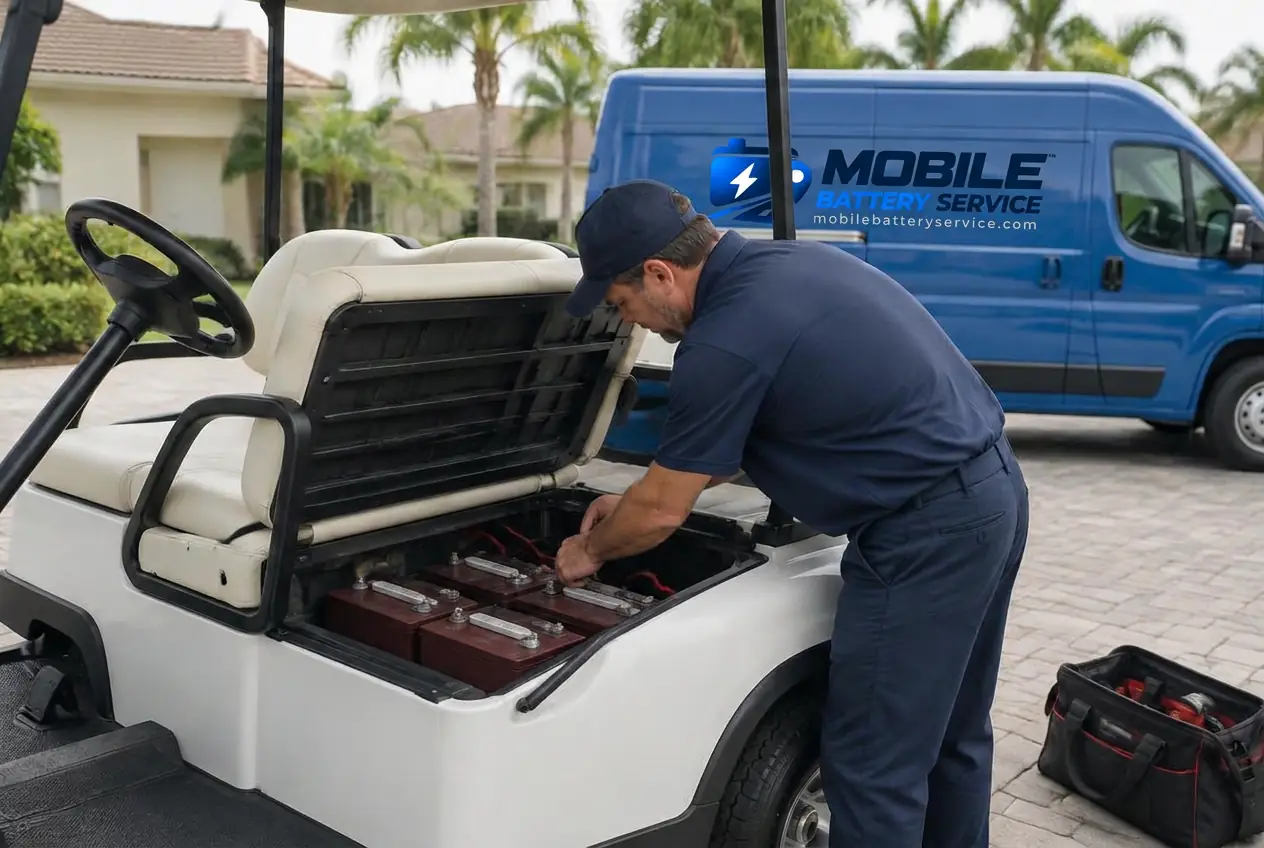
Golf Cart Batteries · Oct 28, 2026 · 5 min read
Why Your Golf Cart Is Losing Range and How to Find the Cause
When a cart that used to run all day starts dying halfway through, the cause is usually one of a handful of things. Here is how to work…
Car Batteries · Oct 28, 2026 · 5 min read
Parasitic Drain: Why Your Car Battery Dies Overnight
If your car starts fine one day and is dead the next morning, something may be drawing power while it is parked. Here is how parasitic drain works…
Popular battery guides
- How Long Do Car Batteries Last in Florida?
- Golf Cart Batteries: Lithium vs. Lead-Acid
- Signs Your Car Battery Is Failing
- Forklift Battery Maintenance Checklist
- What to Do When Your Car Won’t Start
- AGM vs. Standard Car Batteries: Which Do You Need?
Where we work
We come to you across Hernando County, Pasco County, Pinellas County, and Hillsborough County. See all mobile battery services or read more about Mobile Battery Service.