If you have shopped for a golf cart battery, an RV house battery, a trolling motor battery or a solar storage system recently, you have probably seen the letters LiFePO4. It is written on a lot of batteries now, and it is often shortened to “lithium.” But LiFePO4 is one specific lithium chemistry, with its own strengths and quirks. Understanding what it is makes it easier to decide whether it belongs in your cart, boat or RV.
What the letters mean
LiFePO4 stands for lithium iron phosphate. The name comes from the chemistry of the cathode, the positive side of the cell:
- Li is lithium.
- Fe is iron.
- PO4 is phosphate.
You may also see it written as LFP. Same thing.
Other lithium batteries, like the ones in phones and laptops, often use different cathode materials containing cobalt, nickel or manganese. Those chemistries pack more energy into a small space, which is why they are used in electronics and many electric cars. LiFePO4 trades a little of that energy density for other benefits that matter a lot in vehicles and equipment.
How a LiFePO4 battery is built
A LiFePO4 battery is made of many individual cells. Each cell has a nominal voltage of about 3.2 volts. To make a battery that replaces a 12-volt lead-acid battery, four cells are connected in series, giving a nominal 12.8 volts. Larger packs for golf carts combine more cells to reach 36, 48 or higher voltages.
Every quality lithium battery also has a battery management system, or BMS. This is an electronic circuit that monitors the cells and protects them from overcharging, overdischarging, overheating, cold charging and excessive current. The BMS is a big part of what makes a lithium battery safe and long-lived. We explain it in detail in what a lithium BMS does.
How LiFePO4 compares to lead-acid
Weight
LiFePO4 batteries weigh far less than lead-acid batteries of similar usable capacity. In a golf cart, swapping a full lead-acid pack for lithium can remove a large amount of weight, which affects handling, acceleration and wear on the cart.
Usable capacity
Lead-acid batteries last longest when you only use part of their capacity before recharging. Draining them deeply on a regular basis shortens their life. LiFePO4 batteries tolerate much deeper discharges, so more of the rated capacity is usable in day-to-day use. That is one reason a lithium battery with a smaller amp hour rating can often do the same work as a larger lead-acid battery.
Voltage under load
Lead-acid voltage drops steadily as the battery discharges. In a golf cart, that is why the cart feels slower at the end of the day. LiFePO4 holds a fairly flat voltage through most of its discharge, so performance stays consistent until it is close to empty.
Maintenance
LiFePO4 batteries do not need watering, equalizing or terminal acid cleanup. There is no electrolyte to top up and no acid vapor to corrode cables.
Charging
Lithium accepts charge quickly and does not need to sit at a full charge to avoid sulfation the way lead-acid does. But it does need a charger with the right profile. A lead-acid charger with equalizing or desulfation modes can be a problem. See why lithium needs a matched charger.
Upfront cost and lifespan
LiFePO4 costs more upfront than lead-acid. In return, quality LiFePO4 batteries are generally rated for many more charge cycles. Whether that balances out depends on how much you use the battery and how long you plan to keep the cart, boat or RV.
Why LiFePO4 is popular for vehicles and equipment
Compared with the lithium chemistries used in consumer electronics, LiFePO4 is known for being more thermally stable. It is less prone to the runaway heating that has made headlines with other lithium batteries, though any battery can be dangerous if it is damaged or abused. We compare chemistries in LiFePO4 safety vs. other lithium types.
It also tolerates heat better than some other lithium chemistries, which matters in Florida, although high temperatures still shorten the life of any battery. And it has a long cycle life, which suits applications that cycle every day, like golf carts and solar storage.
Where LiFePO4 makes sense
- Golf carts and LSVs that are used often, especially where weight and maintenance matter.
- RV house batteries that run lights, fans, pumps and electronics when you are off grid.
- Boats, for house banks and trolling motors, where weight and deep cycling matter.
- Solar storage, where batteries cycle daily.
It is usually not the right choice to simply drop into a car as a starting battery unless the battery is specifically designed and approved for that use. Car charging systems and starting demands are different from deep cycle applications.
Things to know before switching
- The charger must be compatible. A matched lithium charger, or a charger with a correct lithium profile, is essential.
- The BMS has limits. It may shut the battery down to protect it, for example if it is too cold to charge or a load draws too much current.
- State of charge is read differently. Because voltage stays flat, a voltage-based gauge designed for lead-acid may be inaccurate. Many lithium batteries include a display or Bluetooth app.
- Wiring and mounting matter. Lithium batteries are lighter and may need different hold-downs and cables.
Frequently asked questions
Is LiFePO4 the same as lithium-ion?
LiFePO4 is a type of lithium-ion battery. The term “lithium-ion” covers several chemistries; LiFePO4 is one of them.
Does LiFePO4 need to be stored fully charged?
No. Lithium generally prefers storage at a partial charge, and it self-discharges slowly. Our guide on long-term lithium storage explains how.
Can I mix LiFePO4 and lead-acid batteries?
No. They charge and discharge differently and should not be mixed in the same bank.
Thinking about lithium in Tampa?
If you are considering a switch for a golf cart, RV, boat or solar setup, our lithium battery upgrades service starts with understanding how you use the equipment. We come to you in Tampa and across Hillsborough County, test what you have now, and talk through whether LiFePO4 is a good fit. For carts, our golf cart battery service covers both lead-acid and lithium.
Related services
Related posts
Lithium & LiFePO4 · Oct 28, 2026 · 5 min read
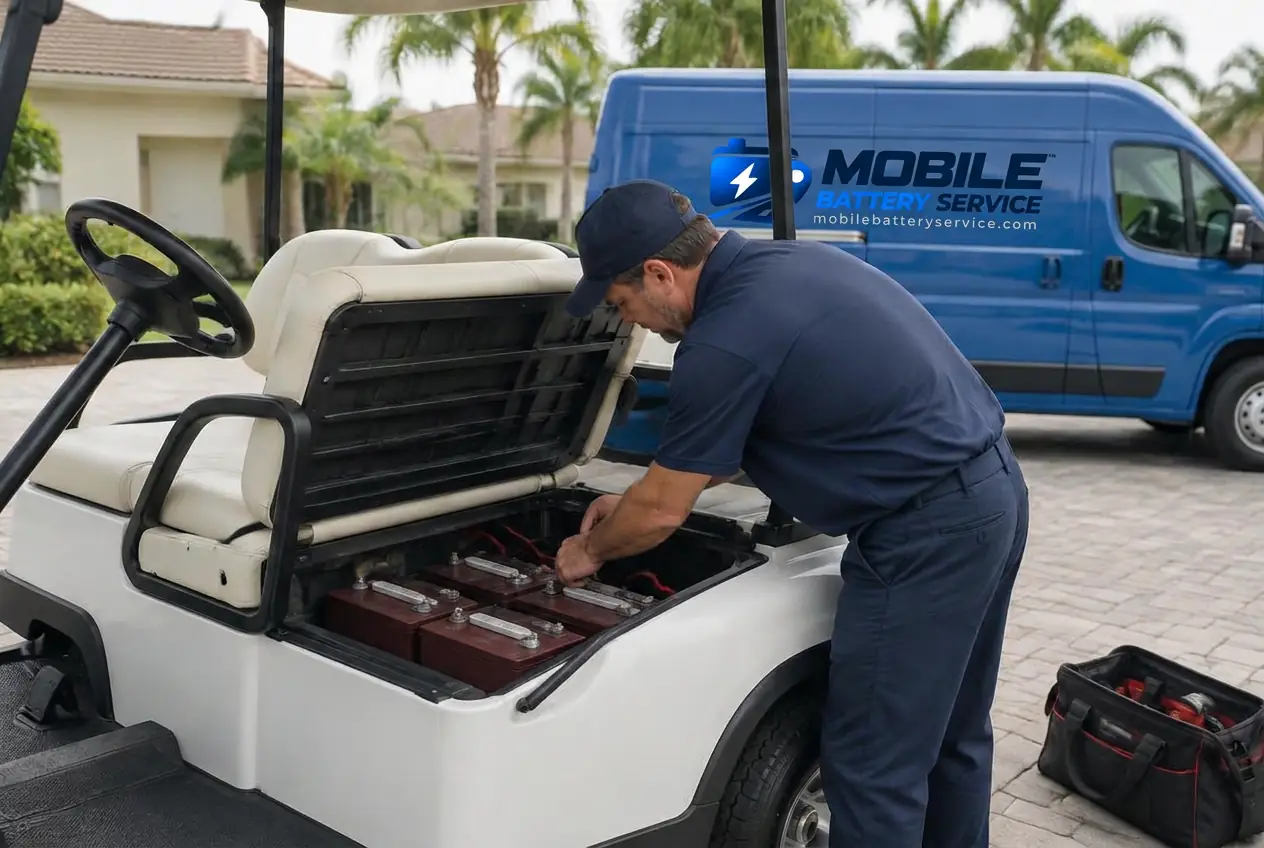
What Happens During a Lithium Golf Cart Conversion, Step by Step
A lithium conversion replaces your cart's lead-acid pack with LiFePO4. Here is what the process involves, what gets checked, and what changes for you afterward.
Lithium & LiFePO4 · Oct 28, 2026 · 5 min read
What a Lithium Battery Management System (BMS) Actually Does
The BMS is the brain inside a lithium battery. Here is what it monitors, how it protects the cells, and why it occasionally cuts power on purpose.
Golf Cart Batteries · Oct 28, 2026 · 5 min read
Why Your Golf Cart Is Losing Range and How to Find the Cause
When a cart that used to run all day starts dying halfway through, the cause is usually one of a handful of things. Here is how to work…
Forklift & Warehouse Batteries · Oct 28, 2026 · 5 min read
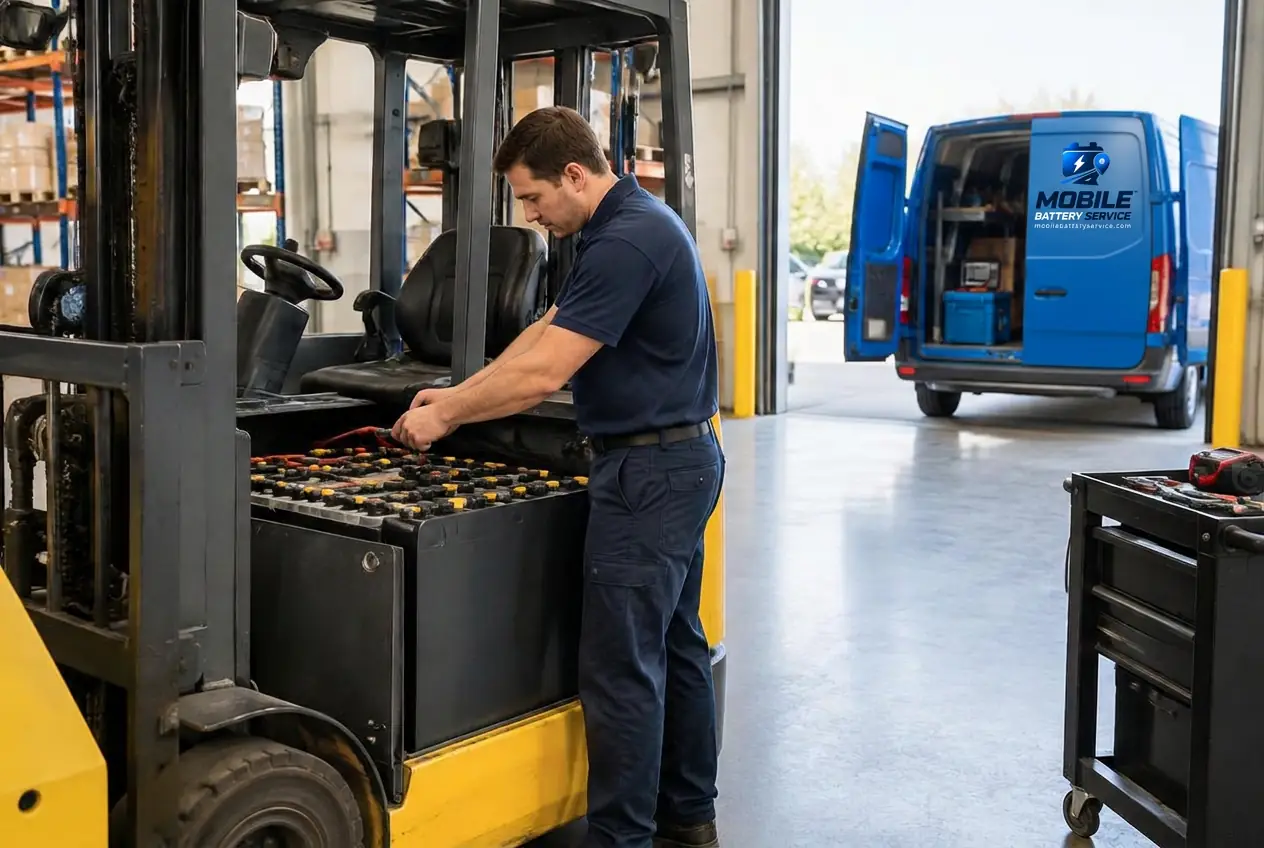
Lithium vs. Lead-Acid Forklift Batteries: An Honest Comparison
Thinking about lithium for your forklifts? Here is how lithium and lead-acid compare on charging, maintenance, runtime, heat and planning, without the sales pitch.
Popular battery guides
- How Long Do Car Batteries Last in Florida?
- Golf Cart Batteries: Lithium vs. Lead-Acid
- Signs Your Car Battery Is Failing
- Forklift Battery Maintenance Checklist
- What to Do When Your Car Won’t Start
- AGM vs. Standard Car Batteries: Which Do You Need?
Where we work
We come to you across Hernando County, Pasco County, Pinellas County, and Hillsborough County. See all mobile battery services or read more about Mobile Battery Service.