
If you have ever needed a jump in an empty parking lot at night, you already know the main weakness of jumper cables: they need a second vehicle. Portable jump packs, sometimes called jump boxes or booster packs, solve that problem. But they bring their own limitations. Which one belongs in your trunk depends on how and where you drive, and on how good you are at remembering to charge things.
How each one works
Jumper cables
Jumper cables are heavy insulated wires with clamps on each end. They connect a dead battery to a good battery in another vehicle, so the running vehicle’s battery and charging system help crank the dead one. They have no battery of their own and never need charging.
Portable jump packs
A jump pack is a compact battery, usually lithium in newer models and sealed lead-acid in older, bulkier units, with built-in short cables and clamps. You connect it directly to the dead battery, switch it on, and crank the engine. Many include USB ports for phones, a flashlight and safety features.
Comparing the two
Independence
Jump pack: works on its own. No second vehicle, no stranger needed, no maneuvering two cars nose to nose in a tight garage.
Jumper cables: need a donor vehicle with a compatible battery. Useful if someone is around to help, useless if you are alone.
Readiness
Jump pack: only works if it is charged. Lithium packs hold charge fairly well, but heat and time still drain them. A pack that has been sitting in a hot car for months may be weak or dead when you need it.
Jumper cables: always ready, as long as they are not damaged.
Heat tolerance
This matters in Florida. Car interiors and trunks get extremely hot. Lithium jump packs have temperature limits for storage and use, and repeated exposure to high heat shortens their life and, in rare cases, can damage the battery. Check the manufacturer’s storage temperature range. Cables are not affected by heat.
Safety
Many modern jump packs include reverse-polarity protection, spark-proof clamps and short-circuit protection. That makes them more forgiving if you connect them wrong. Jumper cables have no protection at all; connecting them in the wrong order or letting clamps touch can cause sparks and damage. If you use cables, follow the steps in how to jump-start a car safely.
Power
Cheap jump packs may struggle with large engines, diesels or deeply discharged batteries. Look at the manufacturer’s recommendations for engine size and type rather than headline peak amps. Cables connected to a running vehicle with a healthy battery can usually supply plenty of current, assuming the cables are a heavy enough gauge.
Modern vehicles
Some vehicles have specific jump-start instructions, remote jump points, or warnings about connecting to the battery directly. Both cables and jump packs should be used according to those instructions. See jump-starting modern vehicles safely.
Which one is right for you?
Choose a jump pack if:
- You often drive alone, at night, or in places where help is not nearby.
- You park in garages or tight spaces where getting another vehicle close is hard.
- You are comfortable remembering to recharge it every few months.
- You want the added safety features.
Choose jumper cables if:
- You usually drive with others or near help.
- You want something that never needs charging.
- Your vehicle is large, such as a diesel truck, and a jump pack sized for it would be bulky.
Or carry both
Many drivers keep cables as a backup and a jump pack as the first option. Cables take up little space, and having both covers you if the pack is dead.
A note on cheap cables and cheap packs
Both tools come in a huge range of quality. Thin, bargain jumper cables often have small conductors hidden inside thick insulation, and they can get hot and fail to deliver enough current to crank a larger engine. Look for a heavier gauge and solid clamps with good springs and copper jaws.
With jump packs, the cheapest models may advertise impressive peak numbers that do not reflect what they can deliver to a cold, deeply discharged battery. Reviews from people with vehicles like yours, and the manufacturer’s own engine size guidance, are more useful than the biggest number on the box. A pack that is a little larger than you think you need is usually the safer choice, especially for trucks and SUVs.
Taking care of a jump pack
- Charge it when you first buy it, and recharge it on a schedule. Set a reminder every few months.
- Check the charge level before long road trips.
- Store it in the cabin rather than the hottest part of the trunk if possible, and bring it inside during extreme heat if the manual recommends.
- Recharge after every use.
- Replace it if it no longer holds charge.
Taking care of jumper cables
- Choose a heavy gauge, and enough length to reach between vehicles comfortably.
- Inspect them for cracked insulation, loose clamps or corroded jaws.
- Coil them loosely and store them in a bag so the clamps do not short against metal.
A jump is a temporary fix
Whichever tool you use, a jump only gets the engine started. If the battery died without an obvious reason, there is something to find. It could be age, heat damage or a drain. Our post on whether to jump-start or replace the battery helps you decide what to do next, and what to keep in a dead battery kit rounds out what to carry.
Frequently asked questions
Can a jump pack charge my battery?
No. A jump pack provides a burst of power to crank the engine. It is not a battery charger.
How long does a jump pack hold its charge?
It varies by model and storage conditions. Heat speeds up self-discharge. Check yours every few months.
Can I jump a car with a dead jump pack and cables?
Not with the pack. With cables, you will need a donor vehicle.
Or skip the hassle in Brandon
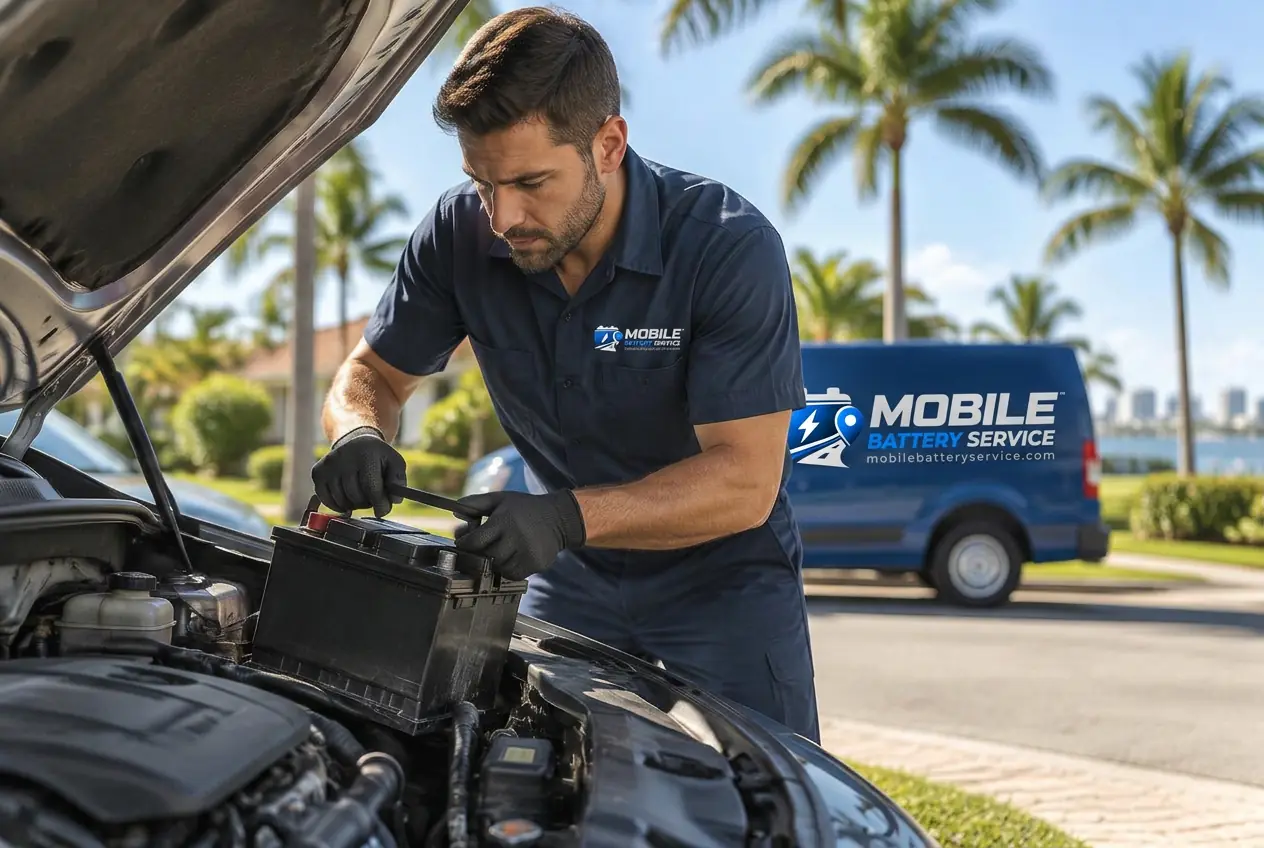
If you are stuck with a dead battery in Brandon or anywhere in Hillsborough County, our jump start service comes to you and includes a free battery test, so you know whether the battery needs replacing. If it does, we can take care of the car battery replacement on the spot.
Related services
Related posts
Jump Starts & Dead Batteries · Jul 5, 2026 · 1 min read
What to Do When Your Car Won’t Start
A step-by-step guide for Tampa Bay drivers stranded with a no-start.
Jump Starts & Dead Batteries · Oct 28, 2026 · 5 min read
How to Jump-Start a Car Safely, Step by Step
A jump start is one of the most useful skills a driver can have, and one of the easiest to get wrong. Here is the safe way to…
Jump Starts & Dead Batteries · Oct 28, 2026 · 5 min read
Car Clicks but Won’t Crank? What the Click Is Telling You
You turn the key and hear a click, or a rapid clatter, but the engine never turns over. The type of click is a clue. Here is how…
Car Batteries · Oct 28, 2026 · 5 min read
Parasitic Drain: Why Your Car Battery Dies Overnight
If your car starts fine one day and is dead the next morning, something may be drawing power while it is parked. Here is how parasitic drain works…
More posts about jump starts & dead batteries · All blog posts
Popular battery guides
- How Long Do Car Batteries Last in Florida?
- Golf Cart Batteries: Lithium vs. Lead-Acid
- Signs Your Car Battery Is Failing
- Forklift Battery Maintenance Checklist
- What to Do When Your Car Won’t Start
- AGM vs. Standard Car Batteries: Which Do You Need?
Where we work
We come to you across Hernando County, Pasco County, Pinellas County, and Hillsborough County. See all mobile battery services or read more about Mobile Battery Service.