
Skid steers are some of the hardest-working machines on a job site, and they are brutal on batteries. The battery is often tucked low in the rear of the machine, surrounded by engine heat and hydraulic components, shaken constantly, and coated in dust or mud. Then the machine may sit for days or weeks between jobs. It is no surprise that a skid steer that will not crank is a common Monday-morning problem.
Here is what goes wrong, how to spot it early, and what keeps machines starting.
Why skid steers are hard on batteries
Constant vibration
Skid steers bounce, rock and jolt all day long. Vibration loosens cable connections and hold-downs, and it shakes the internal plates of a battery. Over time, plate material can shed and settle in the bottom of the cells, reducing capacity and eventually causing internal shorts. A battery that is not held down tightly suffers even more.
Heat
The battery compartment on many skid steers sits close to the engine and hydraulic system. Add Florida summer temperatures and the battery can run very hot. Heat speeds up internal corrosion and water loss, which shortens battery life. We cover this in more depth in job site heat and equipment batteries.
Dirt, dust and moisture
Dust mixed with moisture forms a conductive film across the battery top, which can slowly drain the battery. Mud and debris around the terminals hide corrosion and loosen connections.
Long idle periods
Machines that sit between jobs slowly discharge. Many have small parasitic loads from controllers, telematics or displays. A battery that sits partly discharged in heat sulfates and loses capacity. The longer the machine sits, the more likely it will not start. Our post on why equipment won’t start on Monday explains the pattern.
Short run times
Some skid steers are started, used for a quick task and shut down. Starting takes a lot of energy out of the battery, and a few minutes of running may not put it back.
Warning signs to watch for
Most skid steer batteries give warning before they quit completely:
- Slow cranking, especially first thing in the morning.
- Dash display flickering or resetting during cranking.
- Clicking from the starter without cranking.
- Needing a jump more than once in a short period.
- Corrosion on terminals or cable ends.
- A swollen, cracked or wet battery case.
- Loose battery that moves in its tray.
Catching these early lets you replace the battery on your schedule rather than in the middle of a job.
Cables and connections matter as much as the battery
On skid steers, cables are often the hidden culprit. Constant movement and vibration fatigue the copper strands, especially near terminals. Corrosion creeps under insulation. Ground cables between the engine, frame and battery can rust or work loose.
A battery can test strong and the machine still crank slowly if the cables are bad. Look for:
- Green or white corrosion at the terminal ends.
- Cracked, swollen or stiff insulation.
- Cable ends that are hot after cranking.
- Rusty or loose ground connections.
Our article on equipment battery cable damage covers inspection in more detail.
Choosing the right replacement battery
Skid steers vary in battery size and requirements. When replacing:
- Match the group size and terminal layout so the battery fits the compartment and the hold-down secures it.
- Meet or exceed the cold cranking amps specified by the manufacturer. Diesel engines need strong cranking power.
- Consider vibration resistance. Some batteries are built specifically for heavy-duty or high-vibration use, and AGM construction tends to handle vibration well.
- Use the hold-down. Never run a skid steer with a battery that is not secured.
Habits that extend skid steer battery life
- Keep the battery secured. Check the hold-down whenever you service the machine.
- Keep it clean. Wipe the battery top and clean terminals regularly.
- Use a disconnect switch or maintainer for machines that sit. See equipment battery disconnect switches.
- Run the machine long enough after starting to replace what the start took out, or charge the battery periodically.
- Test the battery before the hot season and before long idle periods.
- Inspect cables at every service interval.
Planning ahead for busy seasons
Many crews have predictable busy periods: land clearing before the rainy season, site work when a big project kicks off, or seasonal work on farms and groves. Testing skid steer batteries a few weeks before those periods means any weak battery can be replaced while the machine is idle, rather than when it is needed most. It is a small step that avoids one of the most avoidable delays on a job site.
When a skid steer will not start on site
If the machine does not crank, check the obvious first: the battery disconnect switch, the safety interlocks such as the seat bar and seat switch, and the fuel. If those are fine and the battery seems weak, a jump start may get you going, but it will not fix a failing battery. Our jump start service can get the machine running and test the battery on the spot.
What we do on site
Our heavy equipment battery service comes to job sites, yards and farms. For skid steers, that usually means:
- Testing the battery and charging voltage.
- Inspecting and cleaning terminals and cables, with anti-corrosion treatment.
- Replacing the battery or cables when needed.
- Checking the hold-down and battery tray.
If you run several machines, we can test them all in one visit and help you plan replacements.
Frequently asked questions
How long should a skid steer battery last?
It depends on use, heat, vibration and how often the machine sits. In Florida, heat shortens battery life, so testing at least once a year is wise.
Can I use a car battery in a skid steer?
Only if it matches the required group, terminal layout and cold cranking amps, and is suitable for vibration. A heavy-duty battery is usually a better choice.
Why does my skid steer die after sitting for a week?
Small loads and self-discharge in heat drain the battery. A maintainer or disconnect switch helps.
Equipment battery service in Pasco County
If you operate skid steers anywhere in Pasco County, from Wesley Chapel to Dade City, we come to the job site or yard to test and replace batteries and cables. For crews with work trucks too, our truck and fleet battery service can cover the whole yard in one trip.
Related services
Related posts
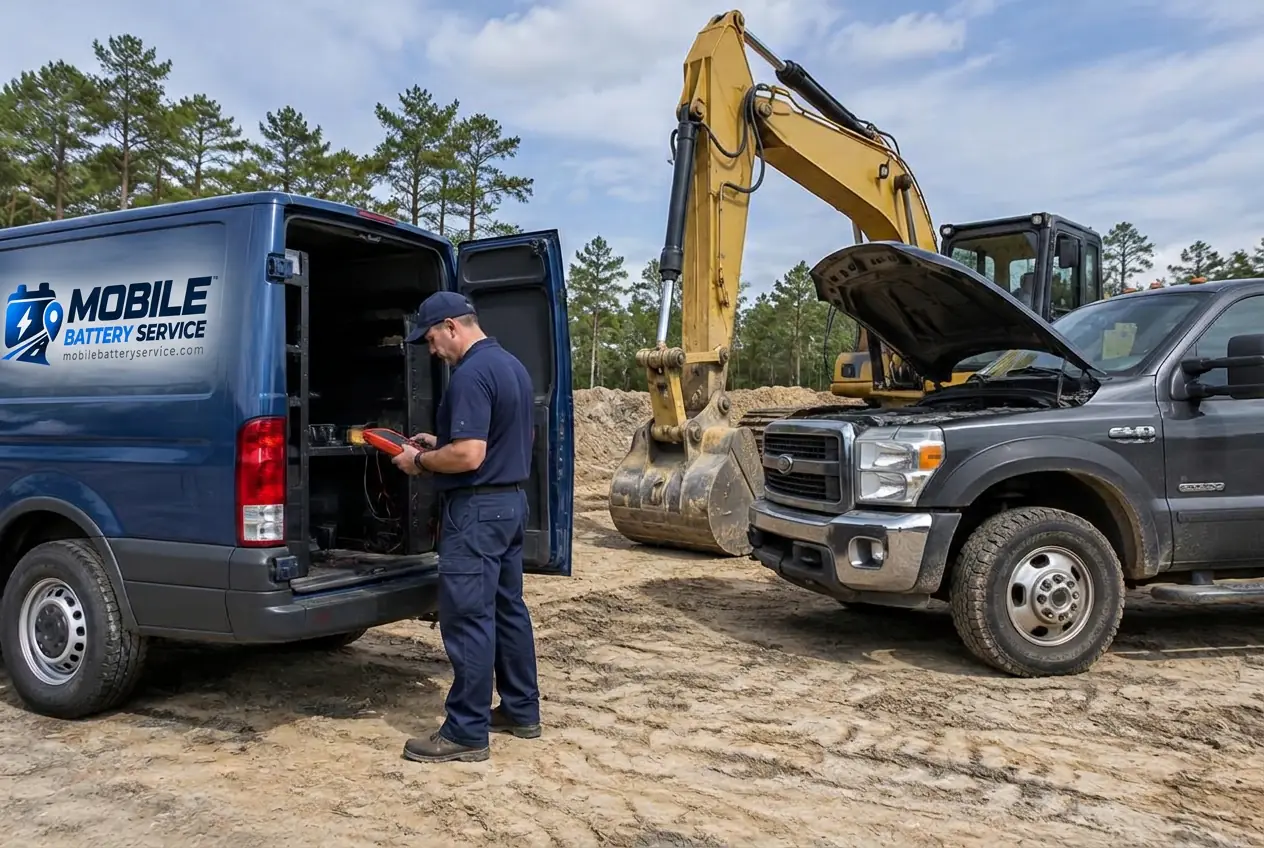
Heavy Equipment & Farm Batteries · Oct 28, 2026 · 5 min read
Standby Generator Starting Batteries: Don’t Let a Dead Battery Beat the Storm
When the power goes out, the generator's small starting battery has one job. Here is why it fails, how to check it, and how to make sure it…
Florida Heat & Seasonal Care · Oct 28, 2026 · 5 min read
Hurricane Season Battery Prep: A Room-by-Room, Vehicle-by-Vehicle Plan
When a storm is on the way, a weak battery can leave you without a car, a generator or a way to get around. Here is how to…
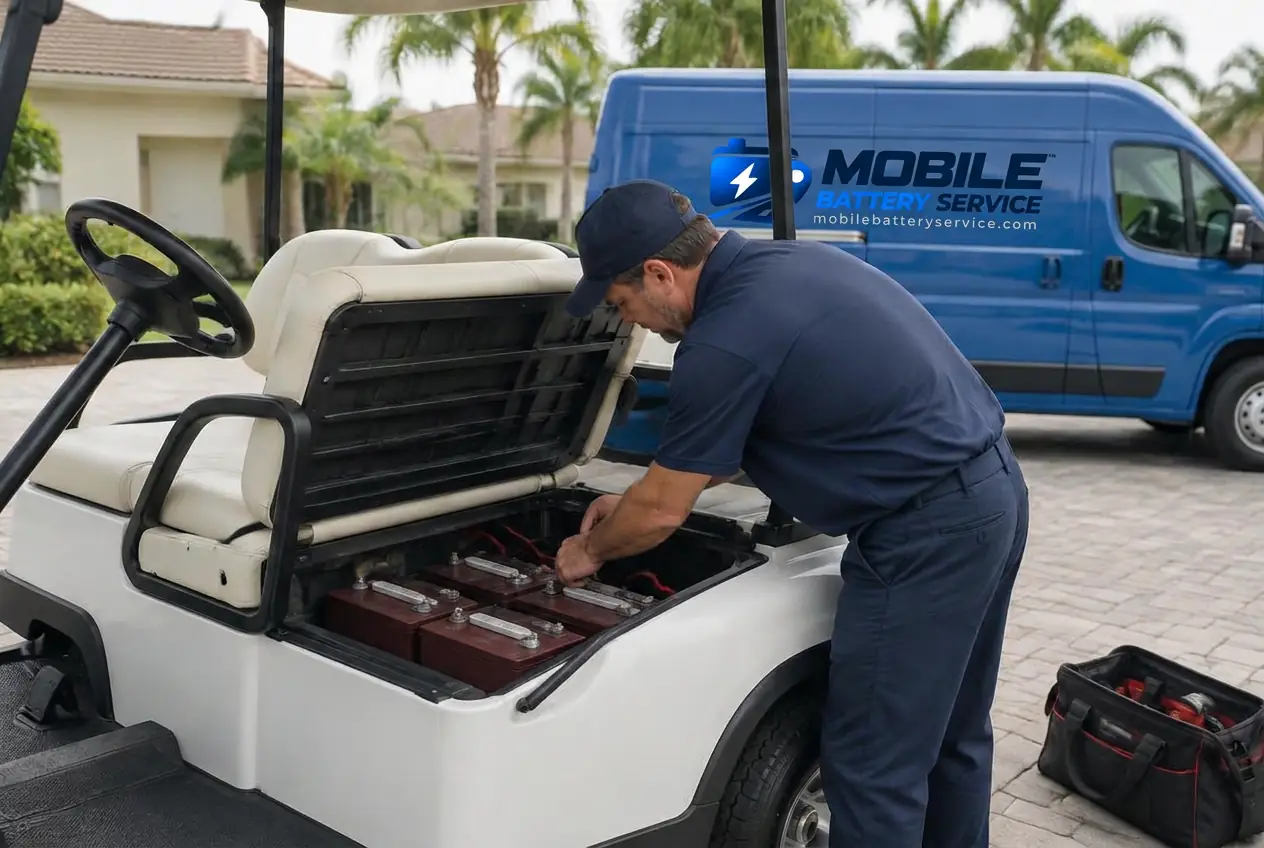
Golf Cart Batteries · Oct 28, 2026 · 5 min read
Why Your Golf Cart Is Losing Range and How to Find the Cause
When a cart that used to run all day starts dying halfway through, the cause is usually one of a handful of things. Here is how to work…
Car Batteries · Oct 28, 2026 · 5 min read
Parasitic Drain: Why Your Car Battery Dies Overnight
If your car starts fine one day and is dead the next morning, something may be drawing power while it is parked. Here is how parasitic drain works…
More posts about heavy equipment & farm batteries · All blog posts
Popular battery guides
- How Long Do Car Batteries Last in Florida?
- Golf Cart Batteries: Lithium vs. Lead-Acid
- Signs Your Car Battery Is Failing
- Forklift Battery Maintenance Checklist
- What to Do When Your Car Won’t Start
- AGM vs. Standard Car Batteries: Which Do You Need?
Where we work
We come to you across Hernando County, Pasco County, Pinellas County, and Hillsborough County. See all mobile battery services or read more about Mobile Battery Service.