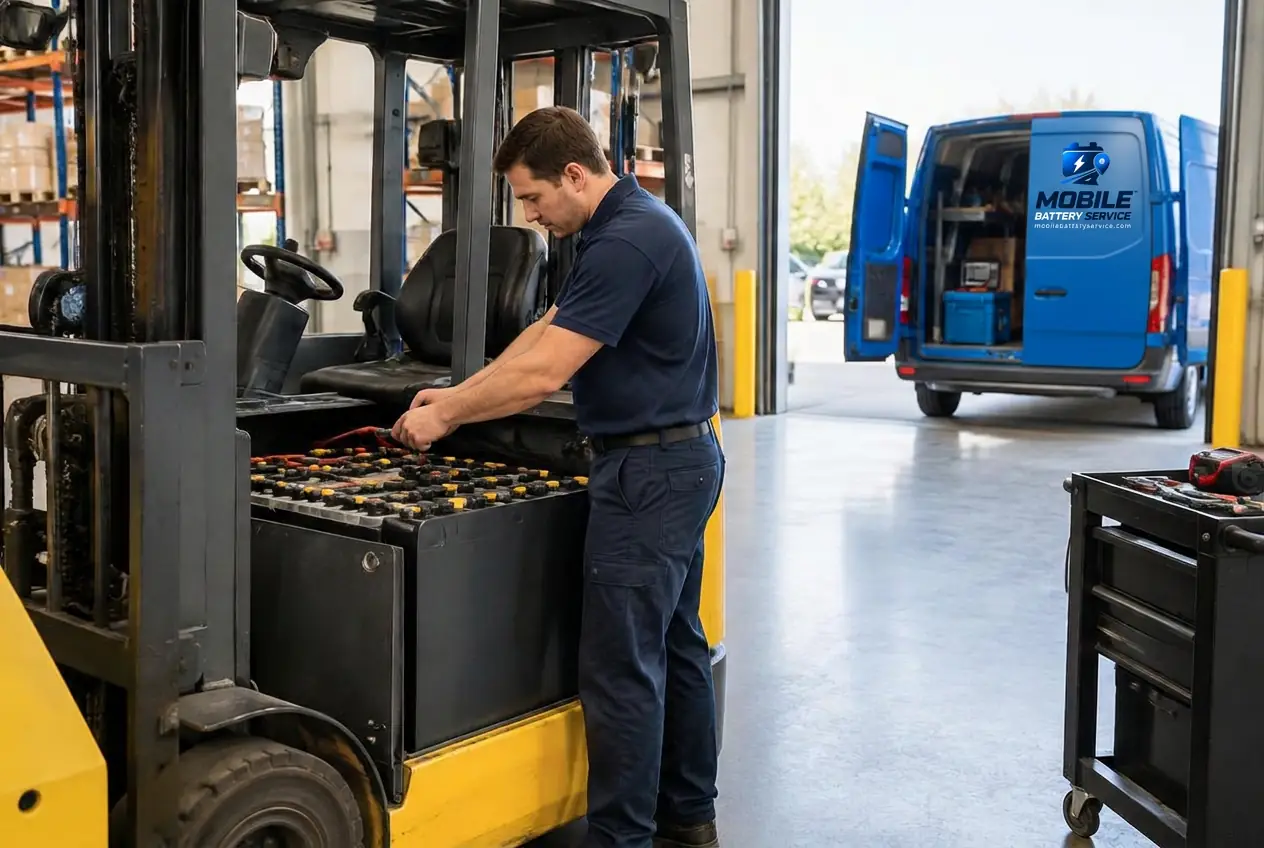
It is a familiar scene in a busy warehouse. A lift truck is running low halfway through the shift, so an operator plugs it in during lunch to squeeze out a few more hours. It works, at least today. Do that every day with the wrong battery and the wrong charger, and the battery that was supposed to last years starts fading in a fraction of that time.
Charging forklifts during short breaks is called opportunity charging. It can be a smart strategy, or a costly habit, depending on the battery, the charger and how it is done.
What opportunity charging means
Opportunity charging means connecting a forklift to its charger whenever there is a break in work: lunch, shift changes, slow periods. Instead of charging once per day or once per shift, the battery gets several partial charges spread through the day.
It differs from two other common approaches:
- Conventional charging: use the battery for a shift, then charge it fully and let it cool before using it again. Common for flooded lead-acid.
- Battery changing: swap a depleted battery for a charged spare so the truck can keep working while the other battery charges. Common in multi-shift lead-acid operations.
Why opportunity charging is hard on standard lead-acid
Standard flooded lead-acid forklift batteries are designed around the conventional cycle: discharge during a shift, then a full charge with a finishing stage and a rest. Opportunity charging disrupts that pattern in several ways.
Heat buildup
Charging generates heat. So does working. A battery that goes from work to charge to work again without a rest never cools down. Heat accelerates corrosion of the positive plates and increases water loss. In a hot Florida warehouse, the effect is amplified. See forklift battery overheating.
Incomplete charges and sulfation
Short charging sessions bring the battery up partway but rarely complete the full charge. A lead-acid battery that seldom reaches full charge builds up sulfate on its plates, and capacity shrinks over time. Regular equalize charges help, but they cannot fully undo the effects of chronic undercharging.
More cycles
Every charge and discharge counts toward the battery’s cycle life. Several partial cycles a day add wear faster than one complete cycle.
Acid stratification
In flooded batteries, the acid can settle with heavier, stronger acid at the bottom of the cells when the battery is not fully charged. The gassing at the end of a full charge mixes the electrolyte. Short charges skip that stage.
When lead-acid opportunity charging can work
Some lead-acid batteries and chargers are specifically designed for opportunity charging. These systems typically:
- Use batteries built to tolerate partial-state-of-charge operation.
- Use chargers with profiles designed for frequent partial charging.
- Schedule a full equalize charge regularly, often weekly.
- Monitor temperature and limit charging when the battery is too hot.
If you plan to opportunity charge with lead-acid, confirm that both the battery and charger are designed for it. Mixing a standard battery with improvised charging habits is where trouble starts. Our post on matching forklift chargers and batteries explains why the pairing matters.
Why lithium is different
Lithium forklift batteries, usually LiFePO4, handle opportunity charging well. They:
- Do not sulfate.
- Accept charge quickly without needing a long finishing stage.
- Are less sensitive to partial charging.
- Are managed by a BMS that watches cell temperature and voltage.
That is why opportunity charging is one of the main selling points of lithium forklift batteries. In some operations, it allows a single lithium battery to support more than one shift without changes. We compare the two chemistries in detail in lithium vs. lead-acid forklift batteries.
Lithium still has limits. The BMS will restrict charging if cells are too hot, and chargers must be designed for lithium.
Signs your opportunity charging is hurting your batteries
If you have been topping up standard lead-acid batteries during breaks, watch for:
- Runtime dropping month by month.
- Batteries that feel hot to the touch at the start of a shift.
- Batteries needing water more often than before.
- Low or uneven specific gravity readings across cells.
- More corrosion on battery tops and connectors.
These symptoms are covered in more detail in forklift runtime dropping.
Better alternatives for lead-acid operations
If your lead-acid batteries are not lasting a full shift, there are other options before resorting to uncontrolled opportunity charging:
- Test the batteries. A battery that no longer lasts a shift may have weak cells or lost capacity. Testing shows whether it is the battery or the routine.
- Fix watering and equalizing. Neglected maintenance shrinks capacity.
- Check the charger. A faulty or mismatched charger may not be fully charging the battery.
- Consider spare batteries for multi-shift trucks. Battery changing lets each battery follow its proper cycle.
- Evaluate a system built for opportunity charging, whether lead-acid or lithium.
Setting rules if you do opportunity charge
If your operation does opportunity charge, put some rules in place:
- Only charge trucks whose batteries and chargers are approved for it.
- Do not opportunity charge a battery that is already hot.
- Schedule a full charge and, for lead-acid, a regular equalize.
- Log charging and battery temperatures.
- Keep connectors and cables in good condition, because more frequent plugging wears them.
Frequently asked questions
Is it bad to charge a forklift battery at lunch?
For a standard flooded lead-acid battery, frequent partial charging can shorten its life. For batteries and chargers designed for it, including lithium, it can be fine.
How often should a lead-acid forklift battery be fully charged?
Follow the manufacturer’s guidance. Most standard batteries are designed for one full charge per working cycle, with periodic equalize charges.
Does opportunity charging save money?
It can reduce the need for spare batteries and changing equipment. Whether it saves money depends on whether it shortens battery life.
Forklift battery service in Tampa
If you are unsure whether your charging routine is helping or hurting, our forklift battery service can test each battery at your facility in Tampa and review charging practices with your team. We provide on-site battery testing and diagnostics so you can make decisions based on real readings.
Related services
Related posts
Forklift & Warehouse Batteries · Jul 22, 2026 · 1 min read
Forklift Battery Maintenance Checklist
A simple weekly and monthly routine that can add years to your industrial batteries.
Forklift & Warehouse Batteries · Oct 28, 2026 · 5 min read
Lithium vs. Lead-Acid Forklift Batteries: An Honest Comparison
Thinking about lithium for your forklifts? Here is how lithium and lead-acid compare on charging, maintenance, runtime, heat and planning, without the sales pitch.
Forklift & Warehouse Batteries · Oct 28, 2026 · 5 min read
How Often Should You Water a Forklift Battery?
A forklift battery that runs dry loses capacity for good. Here is how often to check, when to add water, and how to build a routine your crew…
Truck & Fleet Batteries · Oct 28, 2026 · 5 min read
A Practical Battery Maintenance Schedule for Small Fleets
For a business with a handful of trucks or vans, a dead battery means a missed job. Here is a simple maintenance rhythm that catches weak batteries before…
More posts about forklift & warehouse batteries · All blog posts
Popular battery guides
- How Long Do Car Batteries Last in Florida?
- Golf Cart Batteries: Lithium vs. Lead-Acid
- Signs Your Car Battery Is Failing
- Forklift Battery Maintenance Checklist
- What to Do When Your Car Won’t Start
- AGM vs. Standard Car Batteries: Which Do You Need?
Where we work
We come to you across Hernando County, Pasco County, Pinellas County, and Hillsborough County. See all mobile battery services or read more about Mobile Battery Service.